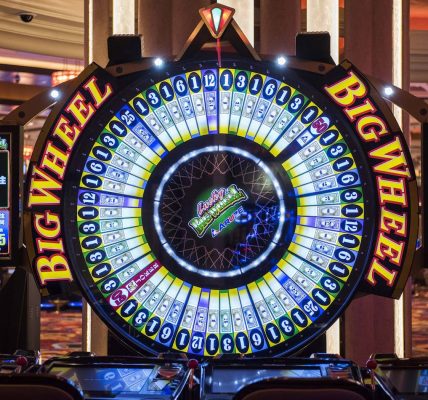

When users log into modern gambling platforms, they see lights, options, and a sense of control. Yet this sense is engineered. From color schemes to button placement, everything is designed to guide behavior. SlotsGet casino uses a clean interface that invites clicks, but each element nudges choices. What appears as free will is shaped by user flow design. The system draws from psychological research to keep players engaged without realizing they’re being managed.
Choice as performance, not freedom
Clicking, spinning, and wagering feel autonomous. But choice exists within a set of narrow paths. Interfaces remove friction. They flatten decisions into reflex. Players may feel empowered, but each move confirms a predesigned journey. The design doesn’t reflect play—it simulates control. Within this structure, autonomy is a performance, staged by developers and monetized by owners. True agency becomes theatrical, contained in digital scripts.
The silent role of infrastructure
Few notice the servers, the latency optimization, or the real-time data pipelines. Yet these form the nervous system of online gambling. This infrastructure doesn’t just support play—it governs it. Every bet, delay, or reward is calculated in milliseconds. Power lies in the invisible. The faster the response, the deeper the engagement. The game is not just what’s on the screen, but what’s hidden beneath it.
The social contract gets rewritten
Traditional games involved players, rules, and outcomes. In online gambling, a new actor enters: the algorithm. This actor rewrites fairness. It adapts odds, tracks behavior, and personalizes risk. What used to be chance becomes data-driven manipulation. The player’s experience is no longer shared. It becomes solitary and opaque. The house doesn’t just win—it learns. It evolves faster than any human strategy can keep up with.
Attention becomes capital
Gambling no longer depends on physical chips or cards. It now runs on attention. Each second spent on the site is value. Not because the player wins, but because they stay. Their presence feeds the algorithm, just like data feeds social media giants. Time is extracted, packaged, and sold. In this context, gambling becomes another form of digital labor—unpaid, unaware, and addictive.
Labor is erased, except where needed
Platform maintenance, customer support, even “live dealers” on streamed games—these involve human labor. But it’s hidden behind gloss and automation. Workers often face poor conditions while presenting a polished experience. The fantasy of a seamless game relies on invisible toil. The casino floor may be digital, but exploitation remains physical. Capitalism adapts, not to reduce labor, but to obscure it.
The architecture of silence
Losses are personal, but winnings are public. This imbalance structures the narrative. It prevents solidarity. If everyone admitted what they lost, the system would shake. Instead, forums, chats, and streams amplify exceptional wins. Failure stays quiet. Platforms reinforce this asymmetry through rewards, animations, and leaderboards. The goal isn’t transparency—it’s isolation. Community gets replaced with competition.
Commodifying uncertainty
Gambling has always dealt in risk. But today, risk is calculated, priced, and resold. Platforms act as both game providers and insurance agents, manipulating odds while shaping outcomes. Players enter thinking it’s chance. In reality, they’re engaging with a risk market. Each spin is a data point. Each loss, a profit signal. In this model, the platform doesn’t gamble—it harvests volatility.
When history disappears
Casinos once had geography, architecture, and rituals. Now they have logins and pop-ups. This flattening erases cultural memory. There are no more shared tables, no familiar dealers. Just avatars and terms of service. Gambling becomes detached from time and place. The platform is always new, always updating. But in this loop, there’s no room for reflection. Only repetition, only acceleration.
Capital without a face
Modern gambling platforms often operate across jurisdictions. Ownership is fragmented, responsibilities diffuse. Who profits from your loss? The answer is hidden behind shell companies, crypto payments, and digital proxies. Regulation struggles to follow. Ethics become outsourced to terms of service. Accountability, once local, becomes abstract. The system doesn’t collapse—it becomes intangible.
Technology doesn’t neutralize power

People often assume digital means democratic. But in online gambling, tech reinforces hierarchy. The player has an interface. The platform has data. One acts. The other predicts. The more you play, the more it knows. This asymmetry deepens. The user contributes to a system designed to outpace them. Every choice adds to a profile. Every pause is a signal. In this ecosystem, knowledge is power—and power accumulates above.
Reclaiming autonomy
Change won’t come from within platforms. Their profit depends on engagement. What’s needed is a shift in perspective. Seeing gambling not as leisure, but as labor. Not as entertainment, but as infrastructure. Questioning not just the game, but the system. Recognizing how control is embedded in design. And imagining systems where time, risk, and attention are not extracted—but shared.
The aesthetic of interface as weapon
Digital design, once the domain of clarity and usability, now functions as a vector of ideological warfare. Color gradients, microinteractions, and fluid animations don’t simply enhance user experience—they manipulate cognitive load. When every corner of the screen is optimized for retention, autonomy dissolves. Cognitive friction vanishes not for accessibility, but for extractive efficiency. The user’s navigational fluency becomes their own trap. Like a casino floor without windows or clocks, the seamless interface isolates consciousness within the rhythm of clicks, reducing reflex to ritual. Interface is not neutral—it is code, coercion, and consent disguised as choice.
Extraction through affective architecture
Platform capitalism doesn’t merely harvest behavior—it colonizes affect. The sensations of anticipation, reward, and frustration are no longer incidental. They are monetized affective states, engineered and looped through operant feedback. Gambling’s digital architecture becomes a skin-tight emotional prosthesis: every loss is algorithmically softened, every win is graphically inflated. This synthetic emotional realism destabilizes perception, making each microdecision feel urgent, personal, and isolated. But beneath the pulse of dopamine and lights, the real engine hums: a system that feeds on volatility, devours attention, and disguises exploitation as engagement.